
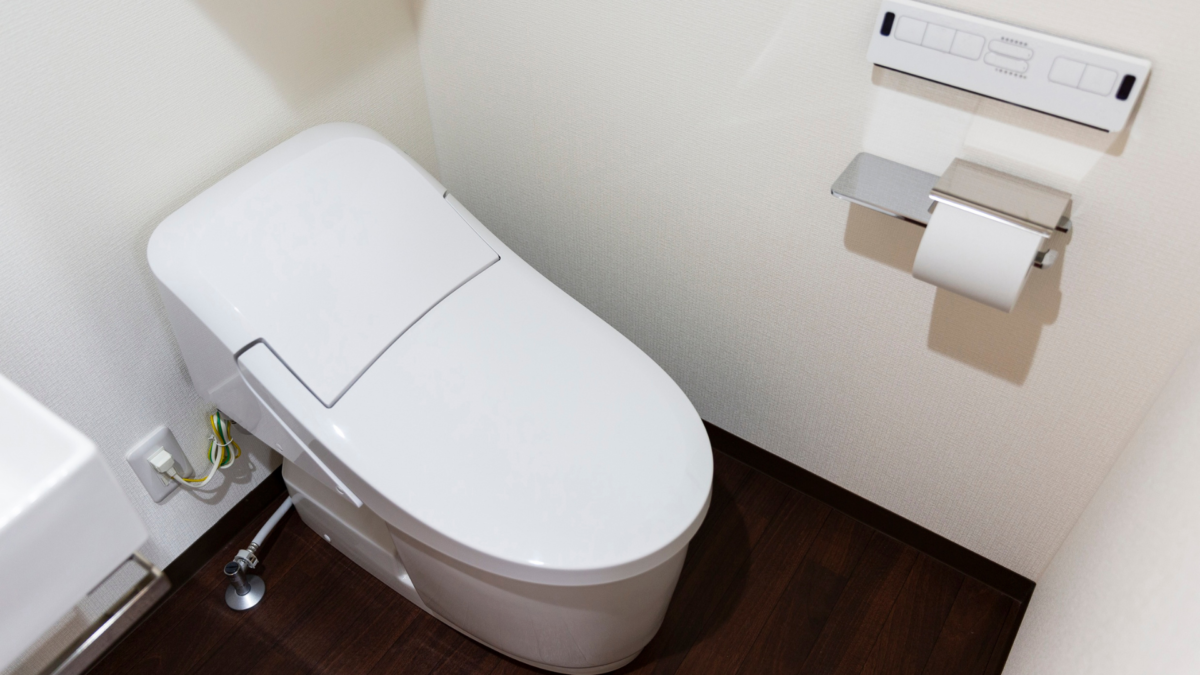
When visitors return from a journey through Japan, they often find themselves articulating a fascination with something quite unexpected: the toilets. While Western tradition often shies away from discussing sanitation—viewing it as a utilitarian necessity at best and a social taboo at worst—Japanese culture embraces it as a vital reflection of the national soul. Indeed, to understand the Japanese toilet is to understand the very heart of the country’s social etiquette.
This cultural difference becomes clear the moment you step into a Japanese facility. You quickly realise that these spaces exist on a completely different level altogether. From the high-traffic corridors of Tokyo Haneda Airport to the quiet corners of a tiny local cafe in rural Kyoto, Japanese restrooms are so impeccably maintained that they feel less like a mere utility and more like a sanctuary.
As someone currently living in the United Kingdom, I have experienced my fair share of ‘challenging’ public facilities. Generally, public toilets in the UK are perfectly functional, but there is often a noticeable struggle to maintain them in high-traffic areas. In a busy city cafe, for instance, the facilities can quickly fall into a state that many of us view with a sense of reluctance —a place to be visited only when absolutely necessary and exited as quickly as possible. This is perhaps why, whenever I fly back to Japan, the moment I encounter a spotless airport toilet, I feel a profound sense of relief. It is more than just hygiene; it is a sensory signal that says, ‘Ah, I am back home.
Shinto Roots and the “Toilet God”
The secret to Japan’s sparkling toilets is not merely advanced technology; it is rooted in a unique blend of ancient spirituality and folklore. This begins with Shinto, Japan’s indigenous spirituality, which posits that Kami (deities) inhabit all aspects of nature and the home. In the Shinto worldview, there is no “dirty” place that is beneath the notice of the divine. So if a god resides in the toilet, it follows that the space must be kept pure and beautiful to show respect. By attaching a divine presence to the most humble part of the house, the act of cleaning is elevated from a “dirty chore” to a “sacred duty.”
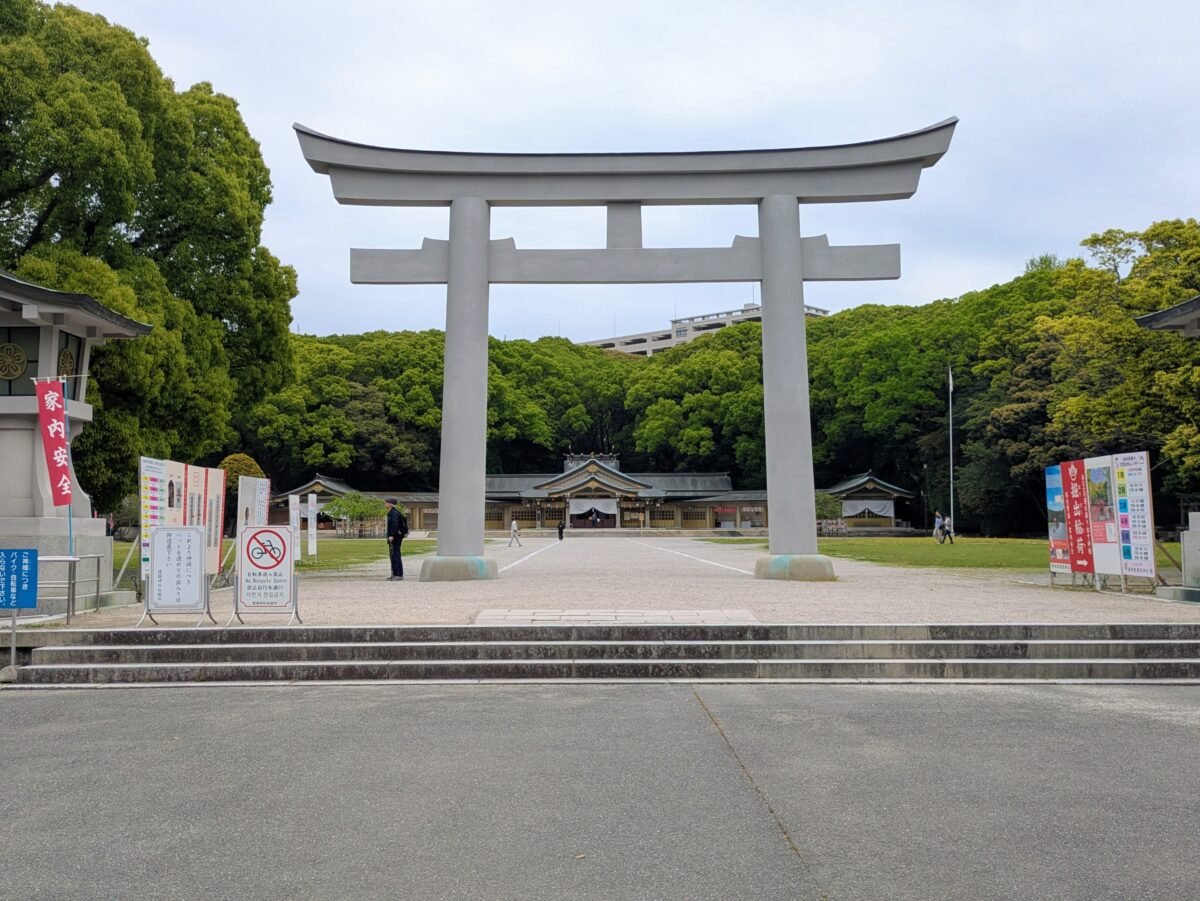
This spiritual foundation has given rise to some charming folk beliefs that are still passed down today. Many Japanese children grow up hearing a piece of “grandmother’s wisdom”: if you keep the toilet exceptionally clean, you will grow up to be beautiful yourself, or one day have beautiful children. To a Western reader, the link between a clean floor and a beautiful baby might seem like a strange fairy tale. However, the logic behind it is quite moving. In Japanese culture, cleaning a place that others might avoid is seen as a sign of a humble and pure heart. The belief suggests that by polishing the most hidden, humble part of the home, you are actually polishing your own inner character. Furthermore, this deity is often linked to the family’s prosperity; keeping her environment pristine is said to bring financial luck and health to the household. In Japan, a sparkling toilet is more than just a sign of good hygiene—it is a way to invite good fortune and “inner beauty” into one’s life.
Polishing the Heart: The Zen Philosophy of Cleaning
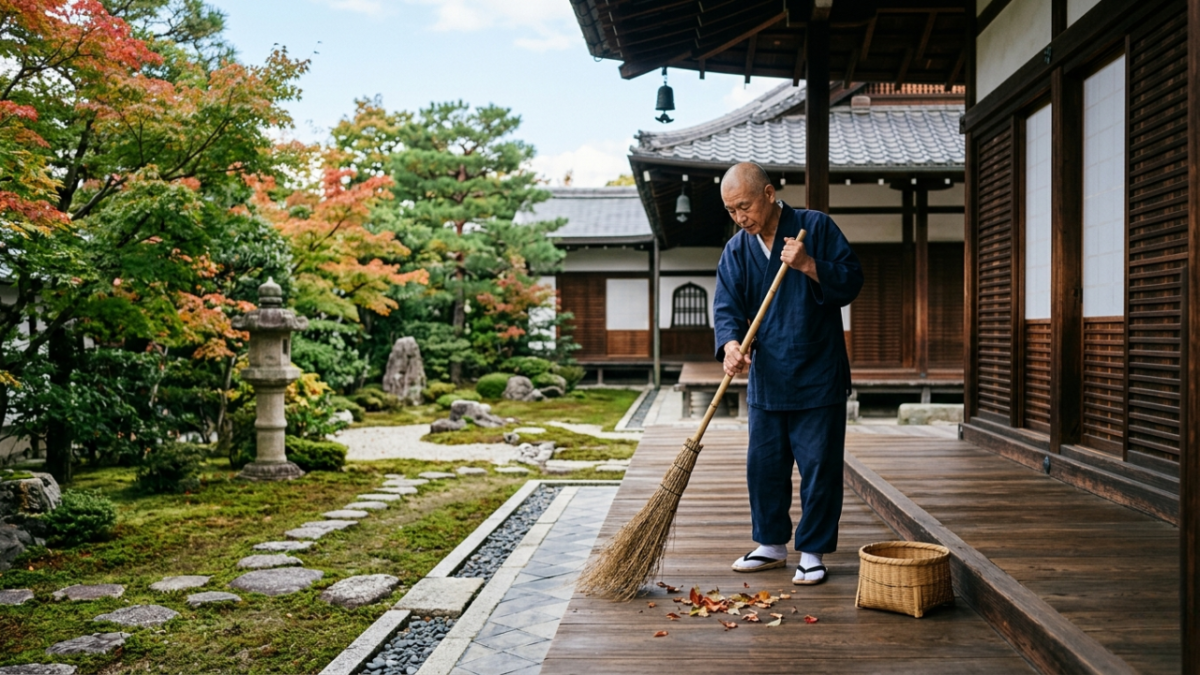
Furthermore, Buddhism—specifically Zen Buddhism—has deeply influenced this mindset by teaching that cleaning is a form of 修行 (Shugyo), or spiritual discipline. In a Zen monastery, cleaning the floors or the toilets is considered just as important as sitting in meditation. There is a famous sentiment in Japan: “Cleaning a place that no one else wants to touch polishes one’s own heart.” When you scrub a toilet bowl, you are not just removing physical dirt; you are symbolically scrubbing away the “dust” and impurities that accumulate in your own mind. It is a practice of humility and mindfulness.
The Classroom as a Training Ground: Learning the Philosophy
This spiritual philosophy is not left to chance; it is systematically nurtured from a very young age through the Japanese education system. This is often the most shocking revelation for my British friends: in Japan, most schools do not employ professional cleaning staff to tidy up after the students. Instead, from primary school through secondary school, students and teachers set aside a dedicated time—usually 15 to 20 minutes every day—called Sooji.
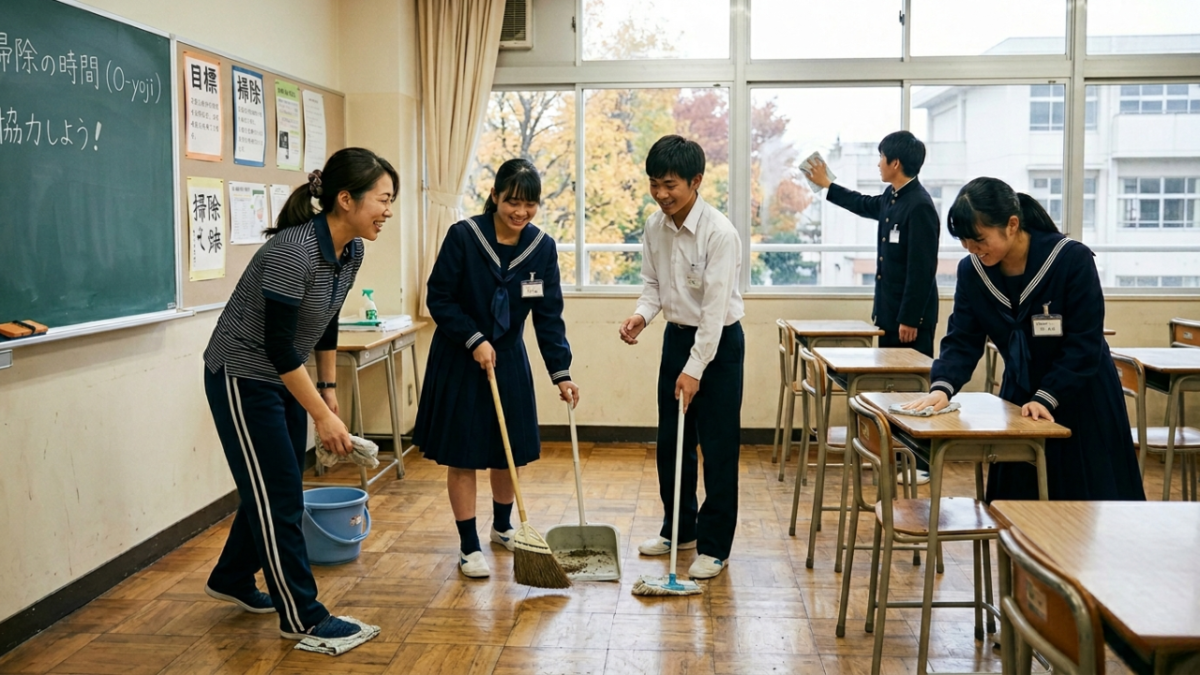
During this time, pupils pick up brooms, damp cloths, and buckets. It is a communal effort where everyone has a role. Together, they sweep the classrooms, wipe down the long corridors, tidy the entrance halls, and yes, even scrub the toilets. There is no sense of ‘that’s not my job’; instead, there is a rhythmic, focused energy as the entire school body works to restore the building to its sparkling best.
When I worked as a high school teacher in Japan, I always joined a group of boys to clean the men’s toilets. I truly looked forward to this time. Scrubbing side-by-side created a relaxed atmosphere where we could chat casually and get to know each other better, away from the formalities of the classroom. For me, cleaning time was precious—not just for keeping the school pristine, but for the genuine communication it fostered with my students.
However, this daily ritual is far more than a social hour or a simple chore; it is a deliberate and vital part of Japanese upbringing.
This practice serves several vital educational and social purposes that define the Japanese character:
- Ownership and Responsibility: When you are the one personally responsible for scrubbing the floor, you are far less likely to litter or make a mess in the first place. By maintaining their environment with their own hands, students learn to take true ownership of the communal spaces they inhabit. It creates a society where people naturally look after their surroundings because they understand the effort required to keep them beautiful.
- Equality and Humility: In the Japanese classroom, everyone cleans. Whether you are the top academic student or a teacher, you share the task of scrubbing the toilets. This practice effectively breaks down social hierarchies and fosters a sense of collective humility. It teaches children from a young age that no work is ‘beneath’ them and that every role is essential to the harmony of the group.
- Anticipatory Consideration: This is the true essence of おもてなし (Omotenashi), or Japanese hospitality. In the West, hospitality is often seen as a service provided by a host to a guest. In Japan, おもてなし Omotenashi is about invisible care. By cleaning the toilet for the “next person,” even if you never meet them, you are practicing the art of anticipating someone else’s needs.
Because Japanese people receive this rigorous “empathy training” for twelve years of their youth, the habit of maintaining public spaces becomes second nature. It is not done because someone is watching; it is done because it is the right way to exist in a shared society.
Marvels of Innovation: Where Technology Meets Empathy
While the spirit of cleaning is ancient, the technology is undeniably futuristic. We cannot discuss Japanese toilets without mentioning the “ウォッシュレット Washlet,” a brand name that has become synonymous with the heated bidet seat. For those of us living in the UK, the idea of a warm toilet seat in the middle of a biting winter is often the ultimate “wow” factor. It provides a stark, welcome contrast to the “cold shock” of a standard porcelain seat common in Europe.
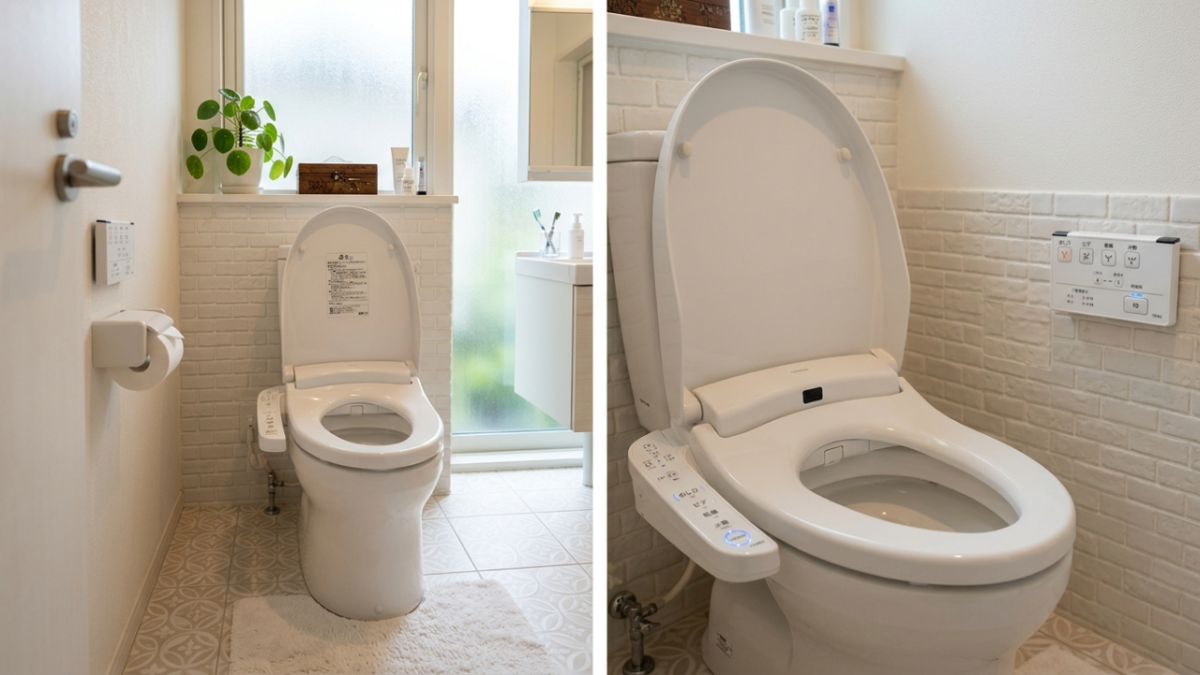
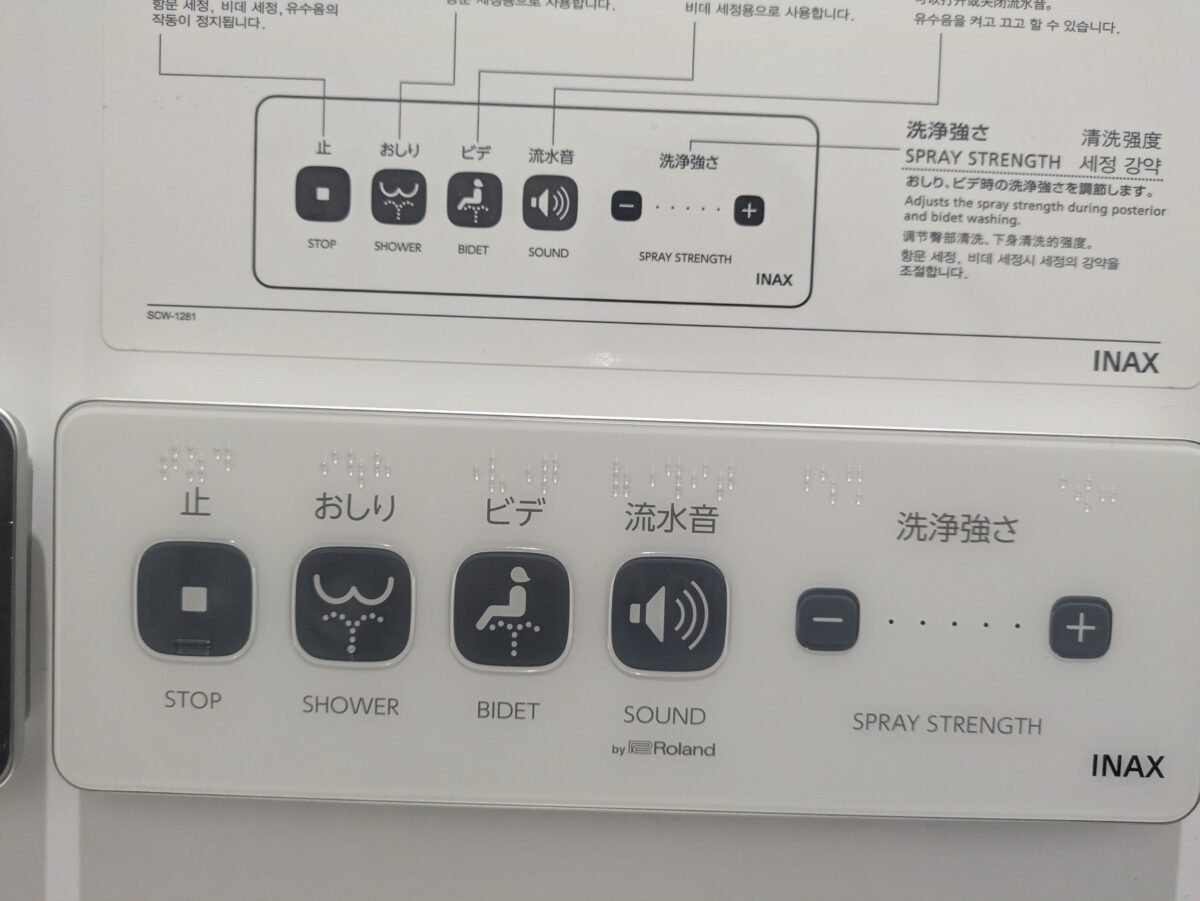
However, these innovations go beyond mere luxury; they are designed with a deep sense of おもいやり Omoiyari (empathy). Consider the automatic lid that opens as you approach and closes as you leave—it is designed so that the elderly or those with physical disabilities don’t have to bend down. Consider the sinks built into the top of the toilet tank, allowing you to wash your hands with the fresh water that will then refill the tank for the next flush—a perfect marriage of hygiene and water conservation.
One of the most uniquely Japanese inventions is the “音姫 Oto-hime” or “Sound Princess.” This device was born from a deep understanding of the Japanese psyche. Historically, Japanese women, who are often raised to be modest and shy, felt a great deal of embarrassment regarding any sounds made while using the cubicle. To mask these sounds, they would flush the toilet repeatedly. During the 1980s, it was estimated that a woman might flush the toilet five or six times per visit, leading to an immense waste of water.
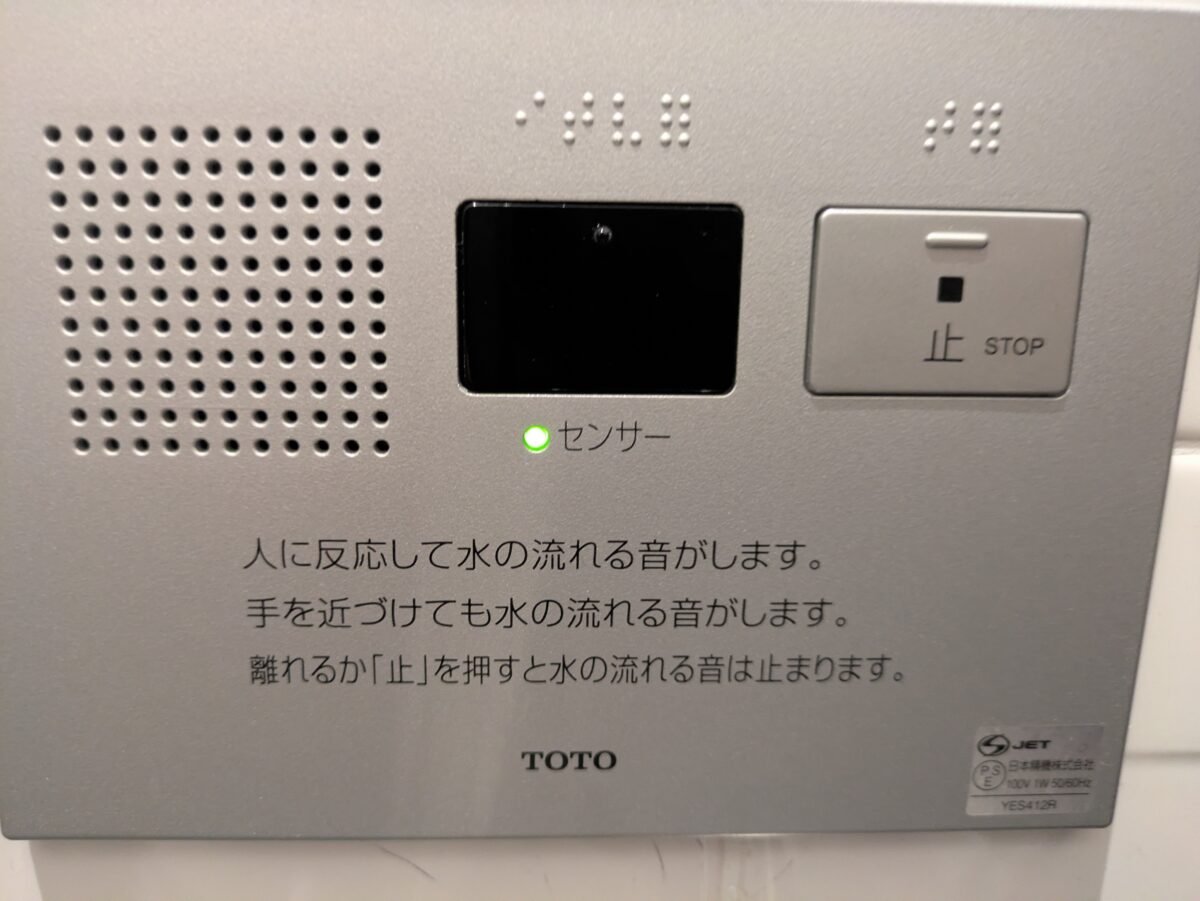
In response, Japanese engineers created the Sound Princess—a small electronic box that plays a high-fidelity recording of running water or soft music at the touch of a button (or a wave of a sensor). It solved a social problem with typical Japanese ingenuity: it protected the user’s privacy and dignity while saving millions of litres of water. It is a “kind” invention that acknowledges human vulnerability.
The Philosophy of the Professional: From “Perfect Days” to Haneda Airport
This national pride is best exemplified by the “masters” of cleaning who view their work not as a job, but as a calling. This has recently been brought to the global stage by the acclaimed film Perfect Days, starring 役所広司 Koji Yakusho. The film beautifully depicts the life of Hirayama, a man who cleans Tokyo’s public toilets. He does not rush; he does not cut corners. Instead, he uses small mirrors to inspect the underside of toilet rims and specially designed brushes for every crevice. He finds dignity and peace in the act of making a public space perfect for a stranger.

This is not just a cinematic fantasy. In real life, Japan celebrates professionals like 西津春子 Haruko Niitsu at Tokyo Haneda Airport. Niitsu-san has been called a “Grand Master” of cleaning. To ensure Haneda consistently ranks as the “cleanest airport in the world,” she utilises a scientific approach, choosing from over 80 different detergents depending on the type of dirt and the material of the surface.

For Niitsu-san, cleaning is an act of kindness. She famously says, “I think of the airport as my home, and the passengers as guests coming to visit me.” When she polishes a handrail or a toilet flusher, she is thinking of the child or the elderly person who will touch it next. In Japan, cleaning is not “rubbish removal.” It is a profound philosophy: “By tidying a space for someone else, you tidy your own heart.” This professional pride—this 職人 Shokunin spirit—is what sustains the legendary cleanliness that leaves visitors in awe.
Conclusion: A Mirror of the National Soul
Ultimately, a Japanese toilet is far more than a high-tech convenience or a marvel of engineering. It is a physical manifestation of a culture that values respect, communal responsibility, and the quiet, disciplined art of hospitality. It tells a story of a people who believe that no task is too small to be done with excellence, and no space is too humble to be treated with dignity.
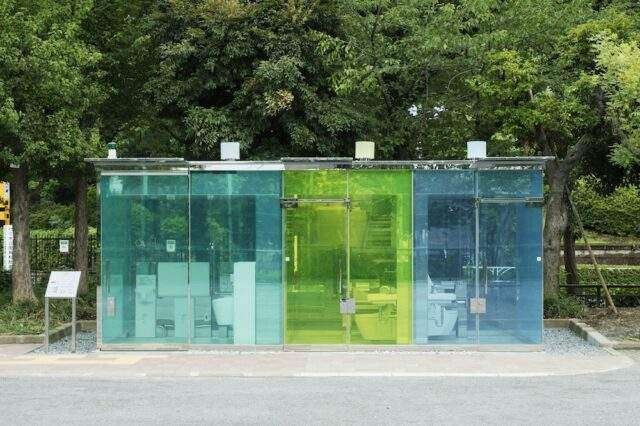
The next time you find yourself in Japan, perhaps at a bustling station in 新宿 Shinjuku or a quiet park in 奈良 Nara, take a moment to appreciate the spotless gleam of the restroom. You aren’t just looking at a clean floor or a high-tech seat; you are witnessing the heart of a nation that finds beauty in the most unexpected places. In Japan, cleanliness is indeed next to godliness—and it starts with a single, polished toilet.
If you would like to listen to a story about this topic in Japanese, please click the link below:📊 Level: JLPT N4–N3 (Post-Beginners and Intermediate Level)
🎁 Download a FREE PDF for this video’s vocabulary and grammar here: https://japanesewithyumiko.com/toilet…
🎁 Get your FREE guide: Beyond the Textbook – 10 Japanese Phrases They Never Teach You in Class! here: https://japanesewithyumiko.com/beyond…